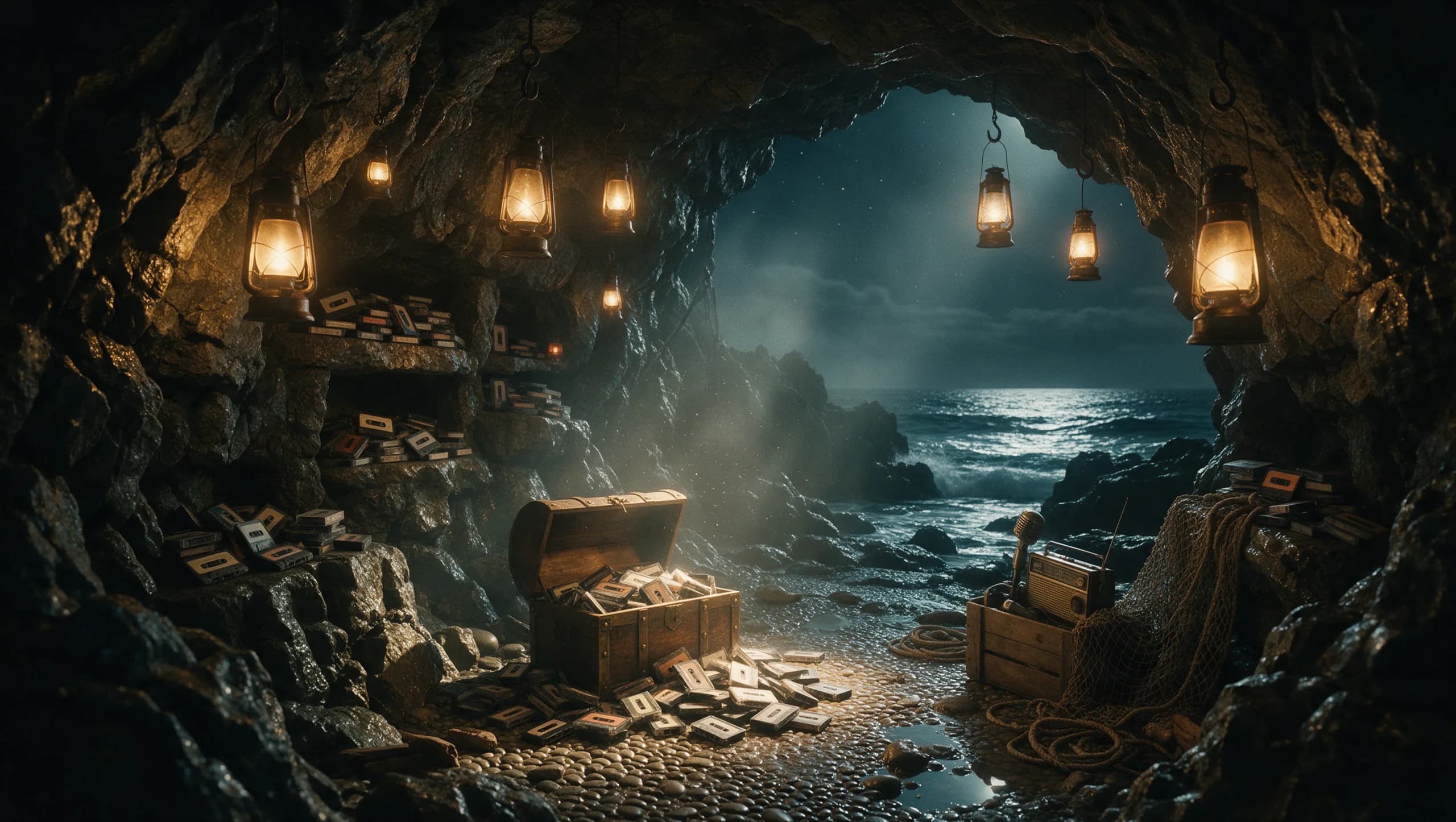
Pirate Radio Cascais
An AI call-in radio station built in about five hours at a hackathon, on Lovable, a platform I hadn't used before. Ask a question out loud and a pirate DJ answers it on air.
Application
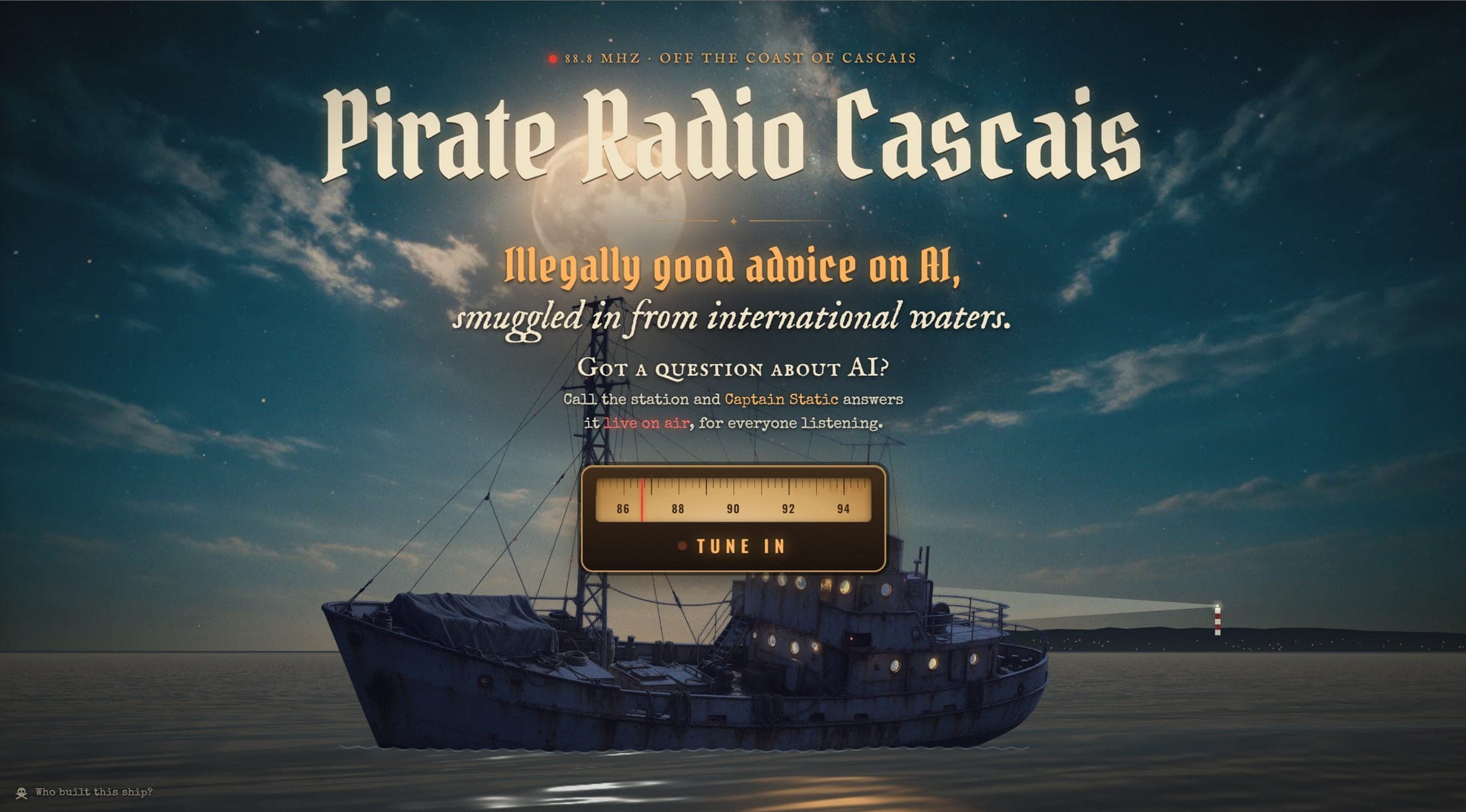
Tune in — the landing scene, dial glowing at 88.8 MHz off the coast of Cascais
Toolkit
The station's own tagline: "Illegally good advice on AI, smuggled in from international waters." Call in with a question, and a pirate DJ answers it on air, then hands you a prompt with your next steps.
The Context
The Lisbon AI Week Vibe Coding Hackathon, run with Cascais AI Hub on 25 September 2026, was built around Lovable, a platform I hadn't used before. The brief arrived at 09:00, and by 10:00 I'd settled on the idea: a pirate radio station on a rusting trawler off the coast, where you ask a question about AI out loud and a pirate DJ answers it on air, between sea shanties about building with AI. The station was designed, built, and published in about five hours.
The Approach
Lovable handled the foundation in a handful of prompts: the scaffold, the database, the connectors, and the first version of the call pipeline. Claude Code wrote the scene, the audio engine, the cave, the admin page, and the guardrails in a GitHub repo synced back into Lovable, which kept visual work off Lovable's credit meter. Higgsfield generated the ship, cabin, and cave art; ElevenLabs produced Captain Static's voice and nine original shanties, one about a crew that runs out of context.
What I Built
The heart of it is a single server function that takes a call from the talk key to the Captain's voice in about 10 to 15 seconds: speech to text, then one screening pass that filters off-topic questions, reads the caller's level, decides whether live research is needed, and catches repeats, which replay the stored tape instead of paying twice. Around it sits a custom scene rather than generated UI: a WebGL ocean whose swell rises with the music, and a two-deck radio mix that ducks for every caller.
The Outcome
I published it on Lovable and showed it to the group the same day. Running a public AI station on a hackathon budget meant designing for cost from the first call: rate limits per browser and per network, a daily ceiling past which the Captain writes his answers instead of speaking them, and a stop switch that takes the station off the air instantly. I'd planned to sign off after the weekend. It's still broadcasting from its permanent home on jayboyd.com, and every new call adds another tape to the cave.